# Wednesday, September 14, 2011

Objectivity in Dating - Part II

How do people end up choosing an unhealthy person to date or marry? In my experience as a counselor, it is skipping over the time in a relationship when objectivity is at its highest. The following is continued from Part I.

Sally

Then it happens. Sally is all set to drive to work one day and the car refuses to start! It’s only been four months since she purchased it. When Sally is the owner, the seller is not responsible for the car - she is. She makes arrangements to take it to a mechanic and finds an alternate way to work. The mechanic calls her later that day with the news, “Your car needs $477 worth of repairs to get it working again. There’s also an oil leak. It will eventually need to be fixed and it will be at least $2000.” “Whoa,” reels Sally, “this car I love is costing me dearly!”

This could happen to anyone. Even if a person is careful to select a mate, there are no guarantees. Our relationships will always require hard work. However, it is possible to do our part to avoid unnecessary heartache. It would be nice to think God would always prevent us from buying a car that needed a lot of work, but He doesn’t. At least He doesn’t all the time. And He is less likely (or we are less able to hear Him) if we are not praying and asking Him to help us make the decision.

A Better Way

Let’s take a closer look at what Sally could have done differently to reduce the likelihood of getting a lemon (but note that once you have a lemon you make lemonade). First, it is positive that she took the car for many test drives. This provides opportunities to experience the car and see how it performs in more than just one drive. However, if Sally has already determined that this car is the one for her, she has already lost most of her objectivity. So while continuing to spend more time with her selection, she is only “falling more in love” which means she is increasingly more likely to overlook any flaws.

To Be Continued

Flaws are not bad; no one is perfect. But, some people are closer to being ready for marriage than others... Stay tuned next week for Part III.

Reflections

  1. Before you are married, are you both feeling "in love" and maintaining objectivity to choose the right person at the right time?
  2. After you are married, are you acting like an "owner" or are you still thinking like a "renter"?

Resources

Luke 14:28-30

Suppose one of you wants to build a tower. Will he not first sit down and estimate the cost to see if he has enough money to complete it? For if he lays the foundation and is not able to finish it, everyone who sees it will ridicule him, saying, ‘This fellow began to build and was not able to finish.’

Read on Bible Gateway
Wednesday, September 14, 2011 10:12:20 AM (Eastern Daylight Time, UTC-04:00)
# Wednesday, August 31, 2011

Objectivity in Dating - Part I

How do people end up choosing an unhealthy person to date or marry? In my experience as a counselor, it is skipping over the time in a relationship when objectivity is at its highest. Let’s consider an example to illustrate this idea.

Sally's Story

Sally, 24 years old and a recent college graduate, needs to find transportation quickly so she can get to work every day. She looks around and takes a car for a test drive. She likes the color, feels comfortable sitting in the car, the car looks to be in good shape, and the car handles the road with ease. It is love at first sight! She comes back the next day and the next, taking the car on drives. Each time she takes the car out for longer drives. Sally is in love with this car!

Sally plans the date of purchase (the wedding), signs the financial papers and finally drives the car away never to return because she is now the proud owner. From this moment forward, everything is different. Sally must drive this car everywhere she goes. She needs this car to take her to work every day. She has to take the car in for maintenance to get the oil changed, rotate the tires, etc. Her whole perspective on the car changes from being a distant admirer, to an up-close admirer, to an up-close owner.

Then it happens. Sally is all set to drive to work one day and the car refuses to start! It’s only been four months since she purchased it. When Sally is the owner, the seller is not responsible for the car - she is...

To Be Continued

Stay tuned next week for Part II.

Reflections

  1. Check your heart. Are you making a dating decision too fast?
  2. What is the difference between leasing (dating) and owning (marriage)?
  3. Are you allowing God to be a part of your mate selection?

Resources

2 Corinthians 6:14

Do not be unequally yoked with unbelievers. For what partnership has righteousness with lawlessness? Or what fellowship has light with darkness?

Read on Bible Gateway

Proverbs 3:5-6

Trust in the Lord with all your heart, and do not lean on your own understanding. In all your ways acknowledge him, and he will make straight your paths.

Read on Bible Gateway

Genesis 2:18

Then the Lord God said, “It is not good that the man should be alone; I will make him a helper fit for him.”

Read on Bible Gateway
Wednesday, August 31, 2011 12:55:05 PM (Eastern Daylight Time, UTC-04:00)
# Sunday, July 31, 2011

Growing Past Barriers in Your Marriage

God made us to be growing and changing. But we are not always growing at the same rate. Sometimes we experience slow growth, and others times fast growth. A growth spurt is usually preceded by a period of rest and even complacency, followed by a period of difficulty and frustration, followed by a determination to choose faith over fear. When faith is excercised and the barrier is past, there is once again a period of rest.

The Sound Barrier

In 1947 Chuck Yeager became the first person to fly faster than the speed of sound. As pilots approached the speed of sound they experienced a barrier called a shock wave. When they hit the shock wave, their plane shook and they retreated. Many pilots died in crashes. But Yeager found that when he accelerated past the sound barrier the plane flew well. Before the barrier is reached, there is resistance. After the barrier is reached, there is peace.

There were planes which could break the sound barrier prior to Yeager. When these pilots went up and approached the speed of sound, the plane shook violently. The more the plane shook, the more frightened the pilot became. When a pilot would try to slow the plane down, often he would crash. The same thing happened to other pilots because they responded to the resistance with fear and backed off from their attempt to achieve a break through.

When Chuck Yeager attempted to break the sound barrier, all the same things happened. His plane shook violently and he became afraid. But, he responded differently to his circumstances. Instead of giving up and slowing down, he decided, "if I am going to die, I am going to go out in style." Instead of slowing down, he sped up and the rest is history. It's okay to be afraid, because everyone encounters fear. But what you do after that makes all the difference.

The Love Barrier

Thankfully God has provided a man and woman some "rocket fuel" to get their marriage off the ground. This fuel is potent stuff. I am speaking figuratively about the onboard hormones (and biochemicals) which drive mutual attraction. These are more than sufficient to bring about feelings of being "in love." When two people are "in love" there is a sort of magical effortlessness to the relationship. It is this effortlessness that drives the two together.

Fortunately, or unfortunately depending upon how you look at it, this state of effortlessness does not last forever. Eventually it runs it course and the same effortless effect is no longer present. This is when a marriage is most vulnerable to shakes and fears. Life and marriage are not without challenges. At this point there develops a fork in the road. How will the couple interpret this lack of feeling in love? Many couples will conclude that because they are no longer in love, there is no point in staying in the relationship. They fear their own lack of ability to produce effortless love. When love becomes work, they back away in fear.

It takes a certain amount of maturity to break this Love Barrier. Marriage is about hanging into there and pressing forward even in the midst of shakes and fears. Press on, pray, and persevere until you make your break through. You will need to overcome by expanding your horizon. Believe in faith there is something better ahead. If you don’t look out very far, then it is easy to make a hasty decision that looks good in the short term. A short term gain might reduce the immediate pressure, but it will mean the eventual crash of your marriage.

Conclusion

Once you've experienced moving past a barrier, you are forever changed. Your brain chemistry maps a new neurological path directly related to your new experience (of successfully breaking the barrier). The next time you are faced with the same barrier, it will be easier to push through. The same barrier will no longer be challenging to you. Enjoy this time of rest, because God is infinite and there are always new horizons to explore.

Reflections

  1. What barriers are you facing in your life? In your marriage?
  2. What fears are preventing you from moving forward past the barriers and into doing what is right?
  3. Is there anything you need to strenghen your faith? Ask Jesus for it now. When there are strong shakes and fears, consider counseling to help you break the love barrier.

Resources

Romans 5:3-4

Not only so, but we also rejoice in our sufferings, because we know that suffering produces perseverance; perseverance, character; and character, hope.

Read on Bible Gateway

James 1:3-4

...because you know that the testing of your faith develops perseverance. Perseverance must finish its work so that you may be mature and complete, not lacking anything.

Read on Bible Gateway

Psalm 25:9

He guides the humble in what is right and teaches them his way.

Read on Bible Gateway
Sunday, July 31, 2011 5:19:53 PM (Eastern Daylight Time, UTC-04:00)
# Friday, February 11, 2011

Where to Focus

Happy Valentine's day! I hope your weekend is enjoyable. Forming a healthy, mature marriage relationship is one of the hardest things you can set out to accomplish. To make it easier to know how you are progressing, let's divide marriage growth into three stages. These stages are overlapping in the sense it is possible to be working in all three at the same time. But each stage builds on the previous one.

#1 The Preparing Stage

The goal in this stage is to emerge with two healthy adults. But individuals in this stage are not mature enough to sustain a healthy relationship. If too much pressure (expectation) is applied, conflict will result and the relationship will fail. This collision is setup when two people meet and fall in love instantly - only to find out later they did not know the person as well as they thought they did. Each person needs to be able to function as a whole person. If you are in the stage and are already married, you will need invest significant time and effort before you will see the fruits of your labor.

#2 The Practicing Stage

The goal in this stage is to emerge with two adults who know how to work together as a team. The individuals are healthy enough to practice being a team – but they are not yet skilled at teamwork. Functioning as an individual is different than as a team. Teamwork takes time to learn. The individuals probably do not have a clear picture of their overall marriage objective(s). This will take time to define and negotiate. Be prepared to uncover areas which require a closer look at your individual health.

#3 The Performing Stage

The goal in this stage is to put the team to good use. The individuals know how to function as a team. They have energy reserves to pursue a purpose greater than they can individually. The can find a common objective and pursue it together. If any growth is needed here, it might simply be spiritual growth that allows the couple to seek God and understand His plan for their marriage.

Reflections

  1. What stage best characterizes your marriage?
  2. If your greatest need is the first stage, consider individual counseling or pre-marital counseling.
  3. If you need help in the second stage, consider marriage counseling.
  4. If you consistently reach the third stage, consider mentoring other couples!

Resources

Genesis 2:24-25

For this reason a man will leave his father and mother and be united to his wife, and they will become one flesh. The man and his wife were both naked, and they felt no shame.

Read on Bible Gateway
Friday, February 11, 2011 11:31:09 PM (Eastern Standard Time, UTC-05:00)
# Friday, May 01, 2009

Committment to Growth

A successful marriage requires two people committed to self-growth. Self-growth is a way of life which includes regular reflection on how to close the gap between who you are and who you want to be (who God made you to be). But even when your partner does not share your enthusiasm for growth, it does not limit you in any way from growing. You can achieve success in life without having a successful marriage. If your partner is not participating this does not excuse you from continuing your own growth. This is confusing for many. Actually when your partner is not participating, it is the perfect time to see how much you've grown. Of course, it is more difficult to be in a marriage when you are the only one wanting to improve the relationship. The trick is knowing what you are responsible for.

Some tasks require two people. Imagine you are working in your yard and there is a pile of rocks you want to move. Some rocks you can move by yourself; others are big enough requiring two people. When you are working alone, how long should you try to move the two-person rocks? Would you think of yourself as a failure because you cannot move the two-person rocks and finish the job alone? If your partner is not with you, then no one, include God, expects you to finish the job. You are not responsible for the outcome. You are only responsible for what you can complete with the strength God provides. When your partner is helping, more is expected than when you are working alone.

Growing Together is a Choice

Couples who commit to growth choose to have a better marriage. As a counselor, I frequently hear couples tell me, “We have grown apart. We feel little for each other. We are like roommates who do not see each other much. The love is gone from our marriage.” It is an attempt to prove their marriage is dead and divorce is the only realistic option. This is nothing less than a decision to abandon a spouse for failure to grow. For these couples, there comes a time when someone says, “I cannot do this any longer.” Most of the time what is really being said is, “I choose to not do this any longer. The effort required to grow under these circumstances is not worth it to me."

Growth is a constant need for all - all who are considered "among the living". Growth keeps us alive. Those who are not growing are tired - their enthusiasm for life is fading. When both partners are truly growing then it is impossible to grow apart – instead they will be growing in mature love and it will keep them together. When a couple says they are “growing apart” can the couple really say they are growing? All they can say is they do not want to grow enough to stay married. If someone experiences complete satisfaction, there is no reason to seek more. And without seeking more, there is no growth. No one can say, "I've maxed out on growth". But there are seasons to change. There are times in life when we have more energy and God's grace to change. At other times we are weak and want only what is easiest.

Ladder of Acceptance

Seeking instant gratification profits little because the goals are so small. Seeking ones own pleasure requires little if any discipline and sacrifice and does not result in lasting pleasure or hope. Eventually it becomes tiresome. Making changes to stop living in the short-term requires determination and a high tolerance for postponing hunger for immediate satisfaction. For longer lasting pleasure and hope, we must choose larger goals and desires that take more time and effort to reach fulfillment.

I call this process climbing the ladder of change. There are at least four rungs:

  • I don’t want to change. I only want what will bring the most immediate satisfaction.
  • I don’t want to change. But I am realizing seeking immediate gratification does not bring lasting satisfaction. Whatever I do to feel better wears off quickly and I am left with all the same problems. I would like to be less selfish, but I don’t know how to make that happen. So I continue seeking my pleasure to cover over the pain.
  • My spouse soaks up any love I give and offers nothing in return. It is like I am giving to a black hole.
  • I realize it is best to change. The Bible teaches I should look to others' interests. More often than not, I continue to seek immediate satisfaction. Some of the time I am able to seek other's best interest.
  • I am excited about the idea of not just living for myself, but in giving of myself to others. Growth is satisfying. While at times I seek my own pleasure, I also regularly seek other’s best interest.

A Little More Every Day

Growth is essential for life. Growth is essential for a marriage. Growth cannot be rushed nor forced. We need a lifetime or more to get love right. Regardless of your place in life (married or single), develop a love for growth. Realizing your need for growth will keep you sober, and allow both you and your partner space to grow.

Notice the little changes your partner makes. Praise and encourage their efforts. Find your own way of coping when your partner is not available and cooperating. Remove dependence on your partner’s ability to change for your own happiness. When your partner cannot meet your needs, take care of yourself by finding legitimate ways to meet your needs without pressuring your partner. Then bring your new found growth back to share with your partner! How do we grow better at marriage? You will always come out ahead if you grow a little every day by God's grace.

Reflections

You will change when the pain of staying the same is greater than the pain of making a change.

It takes more effort to stop growing than to keep growing.

Men are anxious to improve their circumstances, but are unwilling to improve themselves.

James Allen

Resources

2 Peter 3:18
But grow in grace, and in the knowledge of our Lord and Savior Jesus Christ.

Read the entire passage on Bible Gateway

Friday, May 01, 2009 1:15:49 PM (Eastern Daylight Time, UTC-04:00)
# Wednesday, April 01, 2009

Sheltering or Suffering

Marriage is not "until one of us cannot take it anymore". It's until death do us part. Unfortunately too many people rationalize their way out of their commitment when their circumstances change. It is at this point a person's dependence on their partner is revealed. The subtle "I deserve better than this" awakens and begs to be released from the promise. What happens when we look to a relationship for more than it can provide? It becomes an idol.

If pursued according to God’s design, marriage will be a shelter protecting husband, wife, children, and maybe even others. But, to a struggling couple, marriage can be like a tomb. Have you ever felt like the walls were closing in on you? Have you ever thought, “How can we possibly live under the same roof?” A conflicted couple will start to feel their relationship is suffocating rather than sheltering. The air is stale. Breathing is arduous.

Your Marriage Reflects Your Focus

When marriage becomes a place of suffering, momentum can keep you spiraling down. If you continue to focus on what is going wrong, you will lose sight of all that is positive. One way to stop the downward momentum is accept an honest assessment of your situation.

Underneath the suffering there can be a dependence on your spouse for your happiness. You think, “Marriage is supposed to make me happy," or “Marriage is supposed to meet my unmet needs.” The problem with this is when the marriage does not meet your expectations, it is convenient to conclude the marriage is defective and must be discarded. Focusing on what isn’t there doesn’t replenish positives. If you focus on what is not happening the way you want it to happen, it will slowly consume you to where you are imprisoned in an unhappy marriage - because you are unhappy. You might begin to think, “I have got to get out at all costs.”

I Have What it Takes

Where there are difficulties it is nice to think you can make up the difference. But, sometimes loving another person is like trying to squeeze water from a rock. Have you ever felt discouraged because you did not have it in you to love a difficult person? Have you felt things like:

  • If I could do such and such, then my partner would be happy and our relationship would get better.
  • I’d be better off giving to someone who appreciates my efforts.
  • My spouse soaks up any love I give and offers nothing in return. It is like I am giving to a black hole.
  • I can love you out of your deficiencies – and then you will be able to love me in return.
  • I cannot love you; I am a failure.

It is hard to face you are not enough for your partner. It leads to feeling insecure. Actually this is a good sign because God never intended for you to have what it takes. Where you go next is critical. When you realize you cannot love your partner, will you look to God for help?

Escalation

By the time a marriage is failing, it is taking place increasingly as a closed system. A closed system has increased panic and decreased rational thinking. We focus on our survival to the point of eliminating anyone or anything standing in our way. When two are responsible, and you realize you do not have the resources to make it work, it is easy to blame your partner for failure. With fixed resources, two alone cannot sustain each other. It puts too much pressure on one person to meet the needs of the other.

It takes two people to make a marriage work, but only one to cause it to fail. But likewise, it only takes one to cause you to fail. That you is you! It is possible to focus too much on marital success. A lack of progress does not equal failure. When you care more about the success of your marriage for the sake of its benefit than your partner's wellbeing, you've lost before you've begun. People abanondon their partner when they do not want to go down with a sinking ship. In a panic they cut the line which tethers them to their partner. But instead of catching their breath and diving after their partner, they walk (or run) away. Cutting the line does not have to mean abandoning - it can mean removing unhealthy dependence which will breathe new life into a marriage.

Letting God In

In a closed system the pain of the relationship cannot escape. The pain can only be passed back and forth. Marriage is not supposed to be an “us two alone in this together”. In the midst of intense emotional struggling, it is difficult to identify other options beyond the immediate relief of giving in (okay we will do whatever you want) or giving up (I cannot take it anymore). But there are other options to consider. Have you really tried trusting that you’ll be okay even when your marriage is struggling? Do you believe God is with you no matter how your spouse is behaving?

Letting God in means there is another source beyond your partner. It means accepting what your partner can give and looking to God to provide the rest. You will not die if your marriage is struggling. When relying on God, your survival does not depend on your marriage; instead you have the freedom to contribute new life to your marriage. God is the vine. Read John 15:1-17 and consider if there are any ways you are inappropriately leaning on your spouse.

Reflections

Marriages are always moving from one season to another. Sometimes we find ourselves in winter--discouraged, detached, and dissatisfied; other times we experience springtime, with its openness, hope, and anticipation. On still other occasions we bask in the warmth of summer--comfortable, relaxed, enjoying life. And then comes fall with its uncertainty, negligence, and apprehension. The cycle repeats itself many times throughout the life of a marriage, just as the seasons repeat themselves in nature.

GARY D. CHAPMAN

Resources

John 15:5
I am the vine; you are the branches. Whoever abides in me and I in him, he it is that bears much fruit, for apart from me you can do nothing.

Read the entire passage on Bible Gateway

Wednesday, April 01, 2009 11:52:33 AM (Eastern Standard Time, UTC-05:00)
# Sunday, March 01, 2009

Parable of the Sower

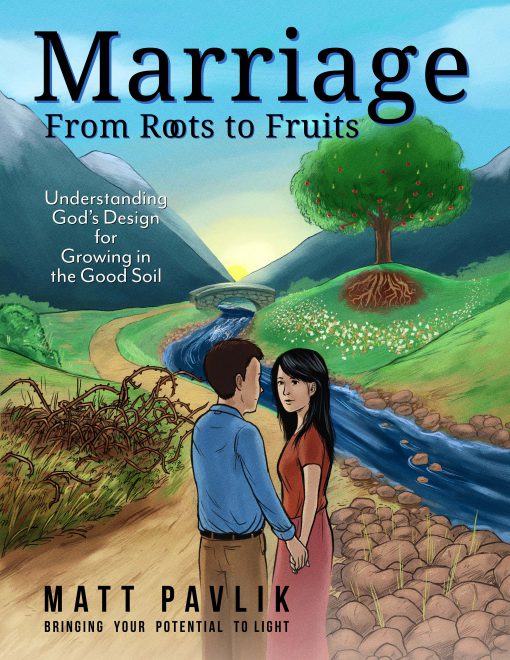
In Matthew 13, Jesus shares the Parable of the Sower. Jesus used the parable to speak about a person’s receptivity to God’s words. Let’s consider how God’s words apply to marriage. The four types of soil in the parable match up with four types of relationships.

On the Path: Conflicted Couple

Jesus makes it clear that the path is literally the hardest place to be. In marriage, when both people’s hearts are hard, look out, because they will either tear each other apart, or be so disengaged that no relationship exists. Either way, the result is a barren (unfruitful) relationship. An infertile, hardened heart will likely result in divorce. In Mark 10:1-12, Jesus explains that divorce is not God’s intention, but was permitted because of hardened hearts.

Jesus says the seed sown along the path is like someone hearing the words, but having no understanding. The ground is so hard – the seed cannot penetrate – so growth cannot begin. There is no life. This couple may be together only by habit and convenience. If this couple has not already given up, they are in danger of separation, divorce, or some type of extra-marital affair.

On the Rocks: Careless Couple

This couple has experienced their relationship as easy so far. This type of relationship usually starts off quickly (received with joy) and may even appear to be thriving (shoots up quickly). This couple acts too quickly without considering if they can finish what they started; they act without really understanding.

This couple is unaware of the complexity of a relationship, which tends to propel the couple to seek the benefits of marriage before building a foundation to sustain the benefits. This impatience may show up, for example, as a financial crisis (debt) or as a pregnancy before marriage. Overall the couple is faced with the serious responsibilities of marrige before they are mature enough to resolve the complications. The complications then become crisises.

Among the Thorns: Choking Couple

This couple has the right idea, but they execute poorly. Intimacy between the couple is blocked or stalled. The couple has a high regard for marriage, but remains disconnected for lack of translating beliefs into action. It is like having a car in good working order, but no fuel. The marriage is also characterized by a lack of emotion and expressiveness.

The couple is distracted by worries of this life and the deceitfulness of wealth. There is a strangle-hold on the marriage – choking it and making it unfruitful. While the potential is high, this couple has allowed too many weeds to grow in the garden of their marriage. The marital relationship is last on a long list of other things now more interesting.

In Good Soil: Cooperating Couple

This couple is both mature (having a high regard for marriage) and experienced (having acted out their convictions). Marriages are not born this way; they must be created, first through inspiration, then through perspiration.

Connection follows from belief. If the marriage vision is not renewed and revisited regularly, complacency can set in. Every couple is susceptible to the deterioration of their relationship. To prevent this, they must regularly refresh their understanding of why they are doing what they are doing. They must have an answer to: “Why is the struggle worth it?” This couple will not drift as long as they continue to act on their beliefs.

Reflections

Where are You?

As no person is perfect, no marriage is perfect. No matter which soil condition more closely describes your relationship, set your goal to increase your knowledge of marriage God’s way and then increase your practice of marriage. When you do this, you will be well on your way to yielding fruit one-hundred times what was sown.

Resources

Matthew 13:23
But the one who received the seed that fell on good soil is the man who hears the word and understands it. He produces a crop, yielding a hundred, sixty or thirty times what was sown.

Read the entire passage on Bible Gateway

Sunday, March 01, 2009 11:28:40 AM (Eastern Standard Time, UTC-05:00)